PSO plans more than 300 EV charging stations and a Rs1.8 billion automation drive to unlock higher fuel margins
The spend is less than 1% of PSO's equity. Company targets completion of supply chain and retail network digitization by March–June 2027, plans expansion into LPG storage and distribution.
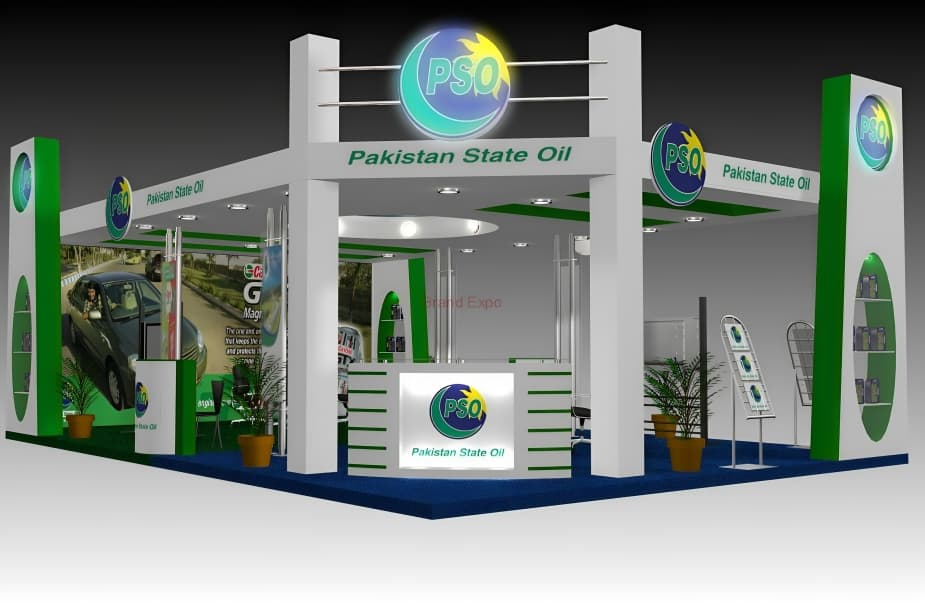
Pakistan State Oil (PSO) plans to build more than 300 electric vehicle (EV) charging stations in major cities and along highways over the next two to three years, and to spend Rs1.5 billion to Rs1.8 billion automating its supply chain and about 3,600 retail outlets. The automation is meant to qualify the company for a higher oil marketing company (OMC) margin that the government has tied to digitisation.
PSO expects to finish the automation between March and June 2027. Management expects part of the margin increase before then and the full increase announced by the Oil and Gas Regulatory Authority (OGRA) once the work is done.
Management told analysts EV charging is a profitable business that justifies continued investment. It did not give a capital cost for the stations.
The plans were set out at PSO's corporate briefing on November 25, according to notes from Topline Securities and Intermarket Securities.
Where the money comes from
The OMC margin on petrol and diesel has been Rs7.87 a litre since October 2023, when it rose from Rs6. On December 9, 2025, the Economic Coordination Committee (ECC) approved a further Rs1.22 a litre, with half due from December 15, 2025 and half linked to digitisation targets.
The federal cabinet then tied the whole increase to 100% digitisation of the supply chain. The Rs1.22 has still not been notified.
PSO sold 1,539,000 tonnes of petrol and 1,532,000 tonnes of diesel in the first half of FY26. That is about 3.9 billion litres in six months, or roughly 7.8 billion litres a year, by Profit's calculations using standard fuel densities.
At Rs1.22 a litre, the full increase is worth about Rs9.5 billion a year to PSO before tax. At that rate, Rs1.8 billion of automation pays for itself. The estimate is conservative. PSO's petroleum sales rose 17.8% in the July to September quarter, against industry growth of 7.1%.
PSO's financials
PSO had total assets of Rs998.8 billion and equity of Rs257.1 billion at December 31, 2025, with Rs75.3 billion in cash. The Rs1.8 billion is 0.7% of that equity and 2.4% of that cash. It is 7% of the Rs25.6 billion PSO earned after tax in the first quarter of FY27 alone.
The constraint for PSO is not size but liquidity. Year-end borrowings rose 8% to Rs384.3 billion in FY26, which management attributed to higher product prices and working capital. About 70% of PSO's short-term borrowing is foreign.
Trade receivables stood at Rs414.8 billion at June 30, 2026, meanwhile circular debt receivables total Rs258 billion, or Rs549 a share, according to Intermarket Securities. Late payment surcharges owed to PSO exceed Rs200 billion and are booked only when received.
PSO recovered Rs34 billion from Sui Northern Gas Pipelines in FY26, and no new receivables built up from that company. The government is working on a circular debt plan, and PSO has said it will share details once it is final.
The economics of a charger
PSO has not disclosed what a station will cost, but retail prices give a floor. A 60kW direct current fast charger with two guns is listed in Pakistan at about Rs2.7 million. One such charger at each of 300 sites would cost about Rs810 million in hardware alone. Grid connection, transformers and civil works come on top. The stations can sit on forecourts PSO already operates.
Charging stations buy power at a fixed tariff of Rs39.70 per kilowatt-hour, cut from Rs71.10 in January 2025. The station's margin is whatever it charges above that.
To show the scale, at an assumed spread of Rs15 per kilowatt-hour, a 60 kilowatt-hour charge earns Rs900. A Rs2.7 million charger would need about 3,000 such sessions to repay its hardware, or about eight a day for a year.
This makes it a considerably easy business decision to make, however the harder question is demand.
Supply against demand
Pakistan had an estimated 30 to 50 public charging stations in May 2026. The National Electric Vehicle Policy 2025-30 targets 3,000 by 2030, including 40 fast-charging stations on the motorways about 105 kilometres apart.
The policy also asks oil marketing companies to fit chargers at 10% of their fuel stations. For PSO's 3,600 outlets, that is 360 sites. The 300-station plan is close to that mandate.
Demand is growing from a small base. EVs make up about 4% to 5% of the car market, according to an Arif Habib Limited analyst. Car sales were 140,253 units in the first eleven months of FY26. Imports of passenger EVs were worth $118.4 million in 2025.
BYD landed more than 2,000 vehicles in Karachi in July 2026, its largest shipment to Pakistan, and is building a 25,000-unit plant with Mega Motor Company. The policy targets 30% of new vehicle sales to be electric by 2030. The government has set aside Rs2.25 billion in viability gap funding for motorway sites where private money alone does not work.