Dasu dam may be ready before the wire that carries its power; National Grid Company blames Chinese contractor for a 16-month slip
The 157-kilometre Dasu-Mansehra line was due on June 9, 2026. Its latest completion date is June 30, 2028, six months before the World Bank loan that pays for it closes.
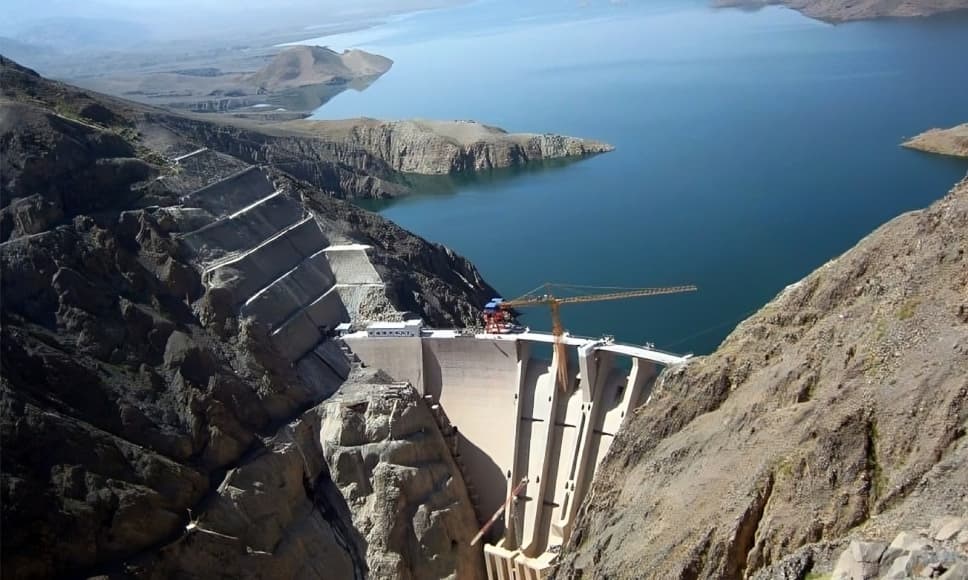
The National Grid Company of Pakistan (NGC) has told Sinohydro Corporation, the Chinese contractor building the 765kV line from the 4,320MW Dasu Hydropower Project to Mansehra, that delays of 14 to 16 months on the project are the contractor's own doing. The contract, signed on December 29, 2022, was due for completion on June 9, 2026. Official progress figures now put completion at June 30, 2028.
That is a slip of two years and three weeks on a 40-month contract. As of September, the line was 46% complete physically and 29.4% complete financially, with $97.2 million paid out of a contract worth about $330 million.
The dispute matters because the line is the only way Dasu's power reaches the national grid. The Water and Power Development Authority (WAPDA) expects the first units at Dasu to start generating in 2027.
Who said what
Sinohydro wrote to NGC on November 2, 2026, blaming slow work on late payments, engineering approvals, right-of-way and statutory clearances.
NGC rejected those claims in a reply dated November 16. It said the November 2 letter did not meet the contract's requirements for a formal claim, and reserved the right to reject claims filed outside the contractual timeframe.
NGC listed the milestones it says the contractor missed.
The route survey and revalidation finished in August 2024, against a June 2023 deadline.
Designs for the D7N and D7H towers were finalised in March 2025, against November 2023.
Pile foundation designs were due in October 2023. The latest document was approved on November 10, 2026.
Prototype tower load testing was due in December 2023. Retests of the D7N and D7T towers ended in April 2025 and May 2026.
NGC said these delays were within the contractor's control and had nothing to do with land access.
It said 20 to 25 work fronts were open to Sinohydro at any time, but many sat idle for want of subcontractors, tower stubs and approved designs. At more than 100 locations, it said, right-of-way clearance was never attempted because the contractor had not mobilised enough resources.
On payments, NGC said money is released against measured and certified work, and that disputed amounts cannot be called delayed payments. Access roads and forest and National Highway Authority clearances are primarily the contractor's job, with NGC required to facilitate.
The engineering dispute is narrower. NGC cited incomplete submissions for dry-pile foundations at about 104 locations. The project consultant has designed extra leg extensions for D7M and D7L towers, and Sinohydro has 14 days to adopt them or state its objections. NGC also said Sinohydro's design team was not in Pakistan during the consultant's expert mission from September 9 to 17.
Sinohydro's full response has not been made public.
419 towers, 60 standing
The line needs about 419 towers over 157 kilometres. By September, foundations had been concreted for 105 towers and 60 towers had been erected, roughly one in seven.
Access roads covered 118 kilometres, reaching sites for 179 towers. About 86 kilometres of conductor had been delivered for a double-circuit line of 157 kilometres.
The spread between physical and financial progress is the gap NGC is pointing at. Design and supply are counted as physical progress. Payment follows erected and certified work, and most of the towers are not up.
The cost of a stranded dam
Dasu Stage-I, with six 360MW units, is designed to produce about 12,225 gigawatt-hours a year, according to the World Bank. That is roughly 1,000 gigawatt-hours a month.
At the revised levelised cost of Rs8.79 a unit, a 14 to 16-month gap between the dam and the line would leave power worth Rs125 billion to Rs143 billion without a route to consumers, by Profit's calculations. The cost to the system would be higher if the power replaced is generated from imported fuel.
The Senate Standing Committee on Economic Affairs put the loss at about Rs2 billion a day once the dam runs without a transmission network. The committee did not publish its method.
Timing on the financing is also tight. The World Bank agreed in principle in April 2024 to extend the closing date of its transmission loan to December 31, 2028. The new completion date leaves six months of room.
The Executive Committee of the National Economic Council (ECNEC) approved Dasu Stage-I in March 2014 at Rs486 billion, with completion due in December 2019. The cost was revised to Rs511 billion in October 2019, only to cover higher land prices.
The second revised PC-I, the planning document, taken up by the Central Development Working Party on April 10, 2025, put the cost at Rs1.737 trillion. ECNEC approved it conditionally in May 2025 and the National Economic Council in December 2025. The Planning Minister ordered third-party validation of what he called an astronomical increase.
In rupees the cost is 3.6 times the 2014 estimate. In dollars the increase is smaller. Rs486 billion was worth about $4.9 billion in 2014 at roughly Rs99 to the dollar. The revised cost is about $6.2 billion, an increase of about 27%, by Profit's calculations.
Most of the rupee increase is the currency. The government attributed the rest to delays and mismanagement. Up to 2023-24, Rs317 billion had been spent.
The transmission component has followed the same path. ECNEC approved power evacuation from Dasu to Islamabad via Mansehra at Rs90.8 billion in October 2019. A later official estimate put the transmission project at Rs132.2 billion.

World Bank's money
The World Bank has been Dasu's anchor lender since 2014, with $588.4 million in concessional credit and a $460 million partial credit guarantee to raise commercial money.
In 2016 the Economic Affairs Division feared the Bank would cancel its loan agreement because land acquisition had stalled. It did not.
In April 2020 the Bank approved $700 million for a 255-kilometre line from Dasu to Islamabad West, with completion due in December 2023. The transmission budget rose from $350 million to $797.1 million, including $82.1 million from the National Transmission and Despatch Company (NTDC), NGC's predecessor.
In 2023 the Senate Standing Committee on Power accused NTDC of tailoring prequalification criteria to favour Sinohydro and the German consultant GOPA-Intec. The Bank said on September 15, 2023 that the contracts followed its procurement rules. In October 2023 it warned that it would withdraw the $700 million if the contracts were cancelled without justification.
The loan's closing date was May 31, 2024. It was pushed to June 30, 2025, then agreed in principle to December 31, 2028. By January 2024, the Bank had disbursed $103.1 million of the $700 million.
A second additional financing of $1 billion was approved in June 2024 but signed only in 2025, after the revised PC-I was cleared. In April 2026 the Bank downgraded progress towards the project's development objectives to moderately satisfactory and kept its risk rating at high. In October 2026 its Inspection Panel registered a complaint over the transmission line's social impacts.
Who is building Dasu
Every main construction contract at Dasu is held by a Chinese company.
China Gezhouba Group Company won the two main civil works contracts in March 2017, worth Rs115 billion for the dam and Rs64.4 billion for the underground powerhouse and tunnels. Only prequalified Chinese firms bid.
Zhongmei Engineering Group won two resettlement contracts worth Rs2.2 billion in April 2017.
A joint venture of GE Hydro China and PowerChina Zhongnan Engineering won the Rs52.5 billion electro-mechanical contract for turbines, generators and transformers in November 2019.
PowerChina signed the contract for the Mansehra 765kV substation, the country's first, in January 2023.
Sinohydro, part of the PowerChina group, signed Lot-I in December 2022. Its price was CNY848.6 million, $23.06 million and Rs30.03 billion.
The three main transmission contracts were worth $654.5 million together.
Security has shaped the schedule. A bus carrying project staff was bombed in July 2021, killing 13 people, nine of them Chinese. Work stopped and resumed in phases from October 2021. Five Chinese engineers were killed in a suicide attack near Besham in March 2024.
The second section, Mansehra to Islamabad West, is 97.6 kilometres. It reported 42% physical progress in 2025. The Senate committee said in December 2025 that a provincial no-objection certificate was still pending.
NGC has not said what penalties it will seek from Sinohydro. Sinohydro has 14 days from the November 16 letter to respond on the tower designs.