
Cotton supply rises 5.66% to 5.13 million bales; but good cotton is now in short supply
Farmers have delivered more cotton than last year. But much of it makes weaker, coarser thread, and textile mills are paying almost a fifth more for the cotton they actually want.
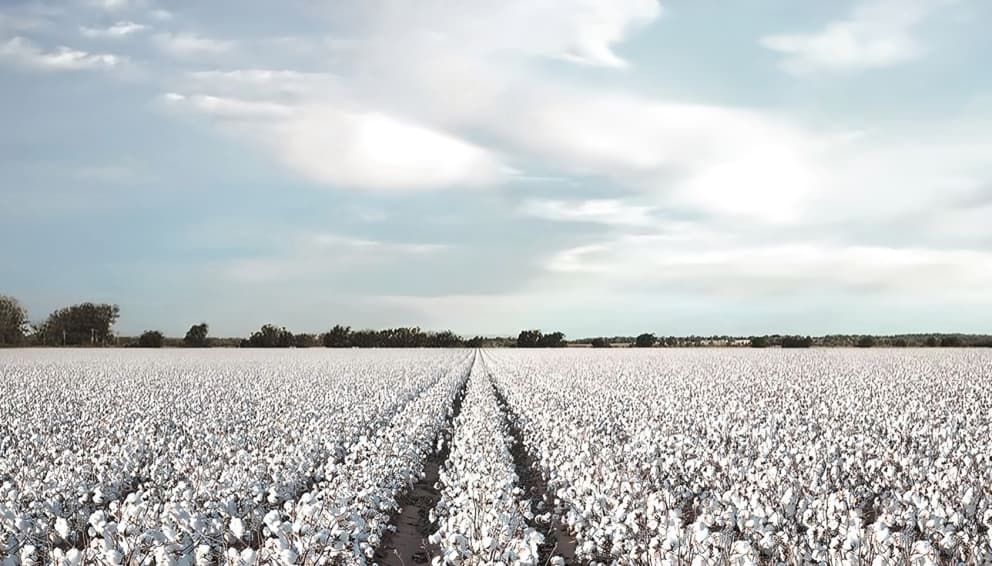
In Sanghar, the Sindh district that grows more cotton than any other, the picking is nearly done. Meanwhile, in the rain-fed fields of Dera Ghazi Khan, Rajanpur, Layyah and Muzaffargarh, farmers have moved on and are waiting for mid-November rain to sow wheat.
What this season leaves behind is a bigger cotton crop than last year, but notably a worse one.
By November 15, the factories that clean and pack raw cotton (Gins) had received 5,131,174 bales. That is 5.66% more than the 4,856,505 bales at the same point last year, according to the latest fortnightly report of the Pakistan Cotton Ginners Association (PCGA).
The quality has gone the other way. Good cotton now sells for more than Rs3,000 a maund above poor cotton, a gap industry representatives say has never been this wide.
From field to thread
Cotton grows on a bush as a fluffy white boll with seeds inside. Farmers pick it and sell this raw, seedy cotton, called phutti, to ginning factories. There, machines pull the fiber away from the seed. Roughly a third of the raw cotton's weight comes out as clean fiber, known as lint.
The lint is pressed into bales. A Pakistani bale weighs about 160 to 170 kilograms. When we counts bales, we are counting these packs of clean fiber.
The bales go to spinning mills, which twist the fiber into yarn, or thread. Weaving and knitting mills turn the yarn into cloth, and garment factories turn the cloth into towels, jeans, bedsheets and T-shirts.
That chain carries the economy's biggest export. Textiles earned about $17 billion in 2025-26, more than half of everything Pakistan sells abroad, and much of it starts as cotton.
Prices of cotton are quoted per maund, a traditional unit of about 37.3 kilograms.
How much arrived
Since the season is winding down, the first half of November brought 388,544 bales, 7.3% fewer than in the same two weeks last year, to the factories.
Arrivals used to be much faster. Until about two years ago, more than a million bales regularly reached the factories in each fortnight of September and October. That has not happened since.
Last season, 87% of the final crop had arrived by mid-November, and that season ended at 5.607 million bales.
Where it came from
Sindh, which the PCGA reports together with Balochistan, supplied 2,879,409 bales, up 7.10%. That is 56% of the national total. Punjab supplied 2,251,765 bales, up 3.87%.
Sanghar alone sent 1,122,000 bales, about 22% of all the cotton in the country and more than the next three Sindh districts combined. Sukkur followed with 336,000 bales, Naushehro Feroze with 268,000 and Khairpur with 250,000.
In Punjab, Bahawalnagar led with 603,000 bales, ahead of Bahawalpur at 435,000 and Dera Ghazi Khan at 305,000.
Balochistan is growing fastest. By October 31, its deliveries were up 35% on the year, at 204,132 bales, and its best cotton fetches the highest price in the country.

Some 410 ginning factories are still running, 207 in Sindh and 203 in Punjab.
Spinning mills have already bought more than 4.442 million bales, 87% of everything delivered. Exporters and traders bought another 98,000 bales.
Less cotton is left unsold than last year, 590,823 bales against 698,262. Of that, 349,458 bales are already cleaned and pressed. The rest, 241,365 bales' worth, is still raw cotton waiting to be processed.
What makes cotton good or bad
When we say the cotton this year was not good, we must have some objective standard. In fact not all cotton fiber is the same, and spinning mills pay for the difference.
The most important measure is length. Each cotton fiber is a single strand, usually around an inch long. Longer fibers overlap more when they are twisted together, so they make thread that is finer, smoother and stronger. Short fibers make thick, rough thread that breaks more easily. Mills call this the staple length.
Strength matters too. Weak fibers snap inside the spinning machines, which slows production and creates waste.
Then there is cleanliness. Cotton picked by hand often carries bits of leaf, dust, plastic or cloth. These are hard to remove and can show up as flaws in the finished fabric.
Good cotton, then, is long, strong and clean. It goes into fine yarn for shirts, bedsheets and export orders that foreign buyers inspect closely. Poor cotton goes into coarser yarn for cheaper products, or has to be mixed with better fiber.
A Rs3,000 gap
Lint is trading between Rs15,500 and Rs18,500 a maund. Which means that the difference between low and high grades has crossed Rs3,000 for the first time, according to industry representatives. A mill now pays almost a fifth more for good cotton than for poor.
The best cotton from Balochistan has reached Rs19,300 a maund, above the top of that range.
The Karachi Cotton Association's benchmark rate was Rs17,800 a maund in early November. What has changed is the spread. Good cotton is scarce, and poor cotton is plentiful.

That leaves mills three choices. Pay more for good local cotton, accept weaker yarn, or import. Market reports this month point to shorter, weaker fibre and more contamination in this year's crop.
Why quality fell
Ihsanul Haq, chairman of the Cotton Ginners Forum, blames unusually high temperatures, and pollution linked to sugarcane cultivation in areas that have traditionally grown cotton.
Heat hits at a delicate stage. Each fiber grows inside the boll over several weeks, and too much heat in that period stops it from reaching its full length and strength. Market reports say the heat ran from July into early November this year, and also hurt the sprouting of seeds.
Sugarcane is the slower problem. It pays farmers more reliably than cotton, so it is spreading into the cotton belt. Punjab has about 2.45 million acres under sugarcane this year, 16% more than last year.
Cane stays in the ground for most of the year and needs far more water than cotton, so land that goes to cane rarely comes back quickly. The United States Department of Agriculture (USDA), in its April assessment of Pakistan's crop, lists sugarcane, maize and rice as the crops farmers are switching to, and poor seed, pests and unpredictable prices as reasons cotton is losing ground.
A third of what it was
A 5.66% rise to over 5.1 million bales in November sounds like a recovery. But against history, it is a small number.
Pakistan produced 14.26 million bales in 2004. The crop was 7.44 million bales in 2021-22, fell to 4.91 million when floods hit in 2022, recovered to 8.4 million in 2023-24, then dropped to about 5.5 million in 2024-25 and 5.607 million in 2025-26.
This season's 5.13 million bales so far is 36% of the 2004 crop.
The government's target for this season is 9.64 million bales from 2.16 million hectares. Last season's target was 10.2 million, and the crop missed it by 45%.
It is important to note that some cotton never shows up in the count. The USDA estimates 28% to 30% of last season's crop went unreported, and says the 18% sales tax on cotton encourages this.

The import bill
Pakistan's textile industry needs roughly 14 to 15 million bales a year, by industry estimates. The home crop covers well under half of that.
The rest comes from abroad, mainly from the United States and Brazil. Market estimates put this season's imports at 7 to 8 million bales, and mills spend close to $3 billion a year on imported cotton.
A shortage of good local cotton adds to that bill. Mills that need long, clean fiber for export orders buy it abroad, and imported cotton is paid for in dollars.
Little cotton is left to arrive. Last season, about 750,000 bales reached the factories after mid-November.
In southern Punjab, the land is already turning over to wheat. Sowing in the rain-fed districts depends on soil moisture and rain in the second half of November.
The next cotton decision comes in the spring, when farmers choose again between cotton, sugarcane, maize and rice.