
Greene Tweed develops PFAS-free hydrogen sealing compound
Greene Tweed introduces new PFAS-free sealing material for hydrogen infrastructure. EPM 893 combines low-temperature performance, rapid gas decompression resistance, and compatibility with hydrogen and carbon capture processes, targeting equipment operating under demanding pressure conditions.
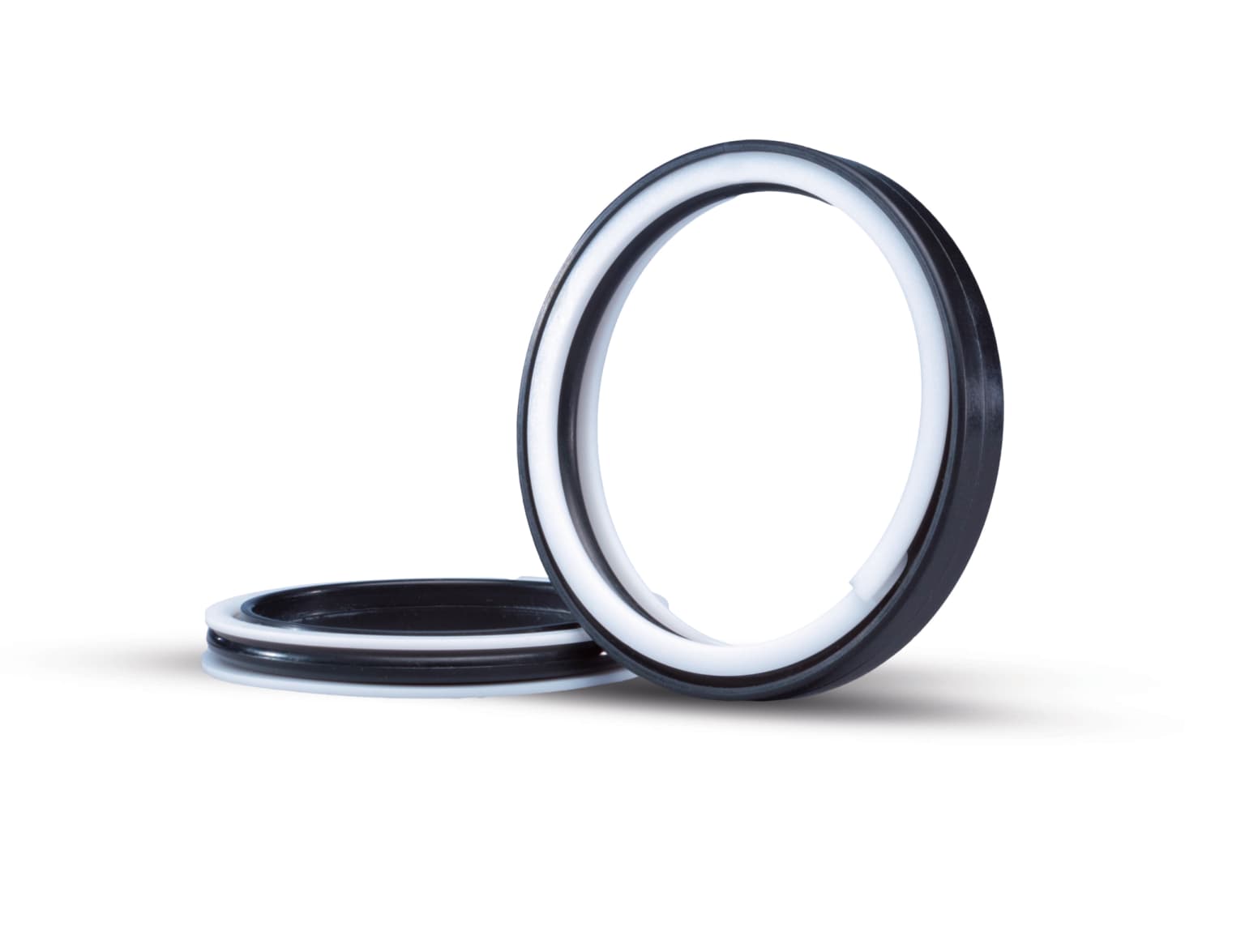
Greene Tweed has introduced EPM 893, a PFAS-free ethylene propylene sealing compound developed for equipment operating in high-pressure hydrogen and carbon capture, utilisation and storage systems.
The material is designed to combine resistance to rapid gas decompression with low-temperature performance and compatibility with several demanding process media. It is available in O-rings, Greene Tweed's GT Rings, and custom-moulded configurations for valves, instrumentation, compressors, pumps, mechanical seals, and pipeline infrastructure.
The development addresses a difficult combination of operating conditions. Hydrogen and carbon dioxide equipment may expose sealing materials to substantial pressure differences, repeated pressure changes, aggressive chemical environments, and low temperatures that can compromise the performance of unsuitable elastomers.
Greene Tweed reports that EPM 893 has demonstrated resistance to rapid gas decompression in hydrogen and supercritical carbon dioxide at pressures of up to 200 bar, equivalent to approximately 2,900psi.
Rapid gas decompression occurs when gas absorbed into a sealing material under pressure cannot escape quickly enough as external pressure falls. The trapped gas expands within the elastomer, potentially forming internal voids, blisters, or cracks.
These defects can affect sealing performance even when the component initially appears suitable for the operating temperature and pressure. Repeated pressure cycles may worsen damage, particularly where the material lacks adequate resistance to the decompression conditions involved.
The risk depends on several factors, including the gas, operating pressure, exposure duration, rate of depressurisation, and geometry of the finished seal. Material performance must therefore be assessed against the conditions expected in the particular installation.
Hydrogen creates additional sealing challenges because of its small molecular size and its ability to penetrate certain materials. Equipment designers must consider gas leakage, material permeability, pressure cycling, and the behaviour of interfaces between the seal and adjacent components.
Carbon capture systems can present different requirements. Carbon dioxide may be handled at elevated pressure, including conditions where it behaves as a supercritical fluid, while other parts of the process can expose equipment to chemically active solutions used to separate CO₂ from gas streams.
Amine-based capture processes are one such application. Amine solutions absorb carbon dioxide before being regenerated for further use, creating requirements for sealing materials that remain compatible with the process fluid over the intended operating period.
Greene Tweed states that EPM 893 has been tested in pure hydrogen, supercritical CO₂, oxygen service, and amine-based carbon capture environments. These results support the material's proposed applications, although each equipment design must still be qualified against its own chemical exposure and operating conditions.
Temperature performance forms another part of the specification. The company reports continuous low-temperature sealing capability down to -60°C, while also listing a typical service temperature range extending from -67°C to 150°C.
These two figures describe different stated performance characteristics and should not be treated as identical operating guarantees. Application engineers will need to establish which rating applies to the actual duty, including pressure, seal geometry, exposure duration, and the nature of the process fluid.
At low temperatures, elastomers may lose flexibility and become less able to maintain contact with the surfaces they are intended to seal. Differences in thermal expansion between the sealing material and surrounding components can also influence the contact pressure available across an interface.
A seal must retain sufficient compression to prevent leakage while accommodating the dimensional changes that occur during operation. The required balance depends on the mechanical properties of the compound and the dimensions of the sealing arrangement.
Greene Tweed says EPM 893 has undergone third-party testing in accordance with requirements associated with ISO 23936-2, ISO 17268/SAE J2600, and NACE TM0192.
These references cover different aspects of materials and equipment performance, making the conditions and scope of the individual tests important when interpreting the results. The company's announcement does not provide a complete independent test report or establish that the material has received a universal certification covering every possible hydrogen or CCUS application.
The new compound is also designed without per- and polyfluoroalkyl substances, commonly referred to as PFAS. Certain fluorinated sealing materials have traditionally been selected for demanding chemical and temperature conditions because of their resistance to process fluids and degradation.
Pressure to reduce the use of some PFAS has increased interest in alternative materials, but replacing a fluorinated compound requires more than identifying a material that is free from the substances concerned.
The substitute must still meet the performance requirements of the intended equipment. Chemical resistance, temperature capability, compression behaviour, dimensional stability, and resistance to rapid gas decompression can all determine whether a particular material is suitable.
Charles Burke, general manager of Sealing Systems and Seal-Connect at Greene Tweed, said: “Companies building hydrogen and CCUS infrastructure need partners who can grow with them from production and capture through transport and storage”.
The company's EPM chemistry provides one approach to addressing these requirements without using PFAS in the new compound. However, its characteristics should not be assumed to match those of every fluorinated elastomer or sealing material currently used in industrial equipment.
Material selection is only one part of the sealing design. The groove dimensions, surface finish, compression allowance, pressure direction, and behaviour of adjacent components can influence performance, even where the compound has demonstrated suitable properties during material testing.
Manufacturing controls also affect the finished product. Elastomer processing must produce consistent material properties and accurately moulded dimensions, while inspection and traceability provide evidence that the seal meets the requirements of its specification.
Greene Tweed is supplying EPM 893 in several forms to accommodate different equipment configurations. Conventional O-rings can be used in suitably designed grooves, while custom-moulded shapes allow the material to be incorporated into more specialised sealing arrangements.
The company has identified applications ranging from hydrogen refuelling equipment and valves to CO₂ compressors, pipelines, and underground storage systems. The mechanical and chemical conditions differ substantially across these applications, requiring individual assessment rather than relying on a single generic operating rating.
Arturo Flores, product manager for Sealing Systems at Greene Tweed, said: “EPM 893 was developed to reduce the tradeoffs engineers typically face in these environments.”
The manufacturer has not disclosed independently verified service-life improvements or quantified reductions in leakage or maintenance frequency compared with specific competing materials. These outcomes will depend on the complete sealing arrangement and the conditions encountered in service.
EPM 893 extends Greene Tweed's materials portfolio for hydrogen and carbon capture equipment, with commercial use dependent on application qualification and the ability of equipment manufacturers to demonstrate reliable sealing performance within their specified operating envelopes.
Written by
People First